Tag

practical tips

August 4, 2021

Getting Started with the Evergreen Planner: The Monthly

As we’ve said before, the Monthly booklet is the muscle of the Evergreen Planner system. It is intuitively designed to help you plan your weeks, time-block your days, organize your thoughts, develop highly effective habits, and generally make space for the most important things in life. It is a way of planning that will grow with you as you hone your planning skills & planning rhythm. The way you use it in your first month will likely be entirely different than the way you use it 12 months in. 

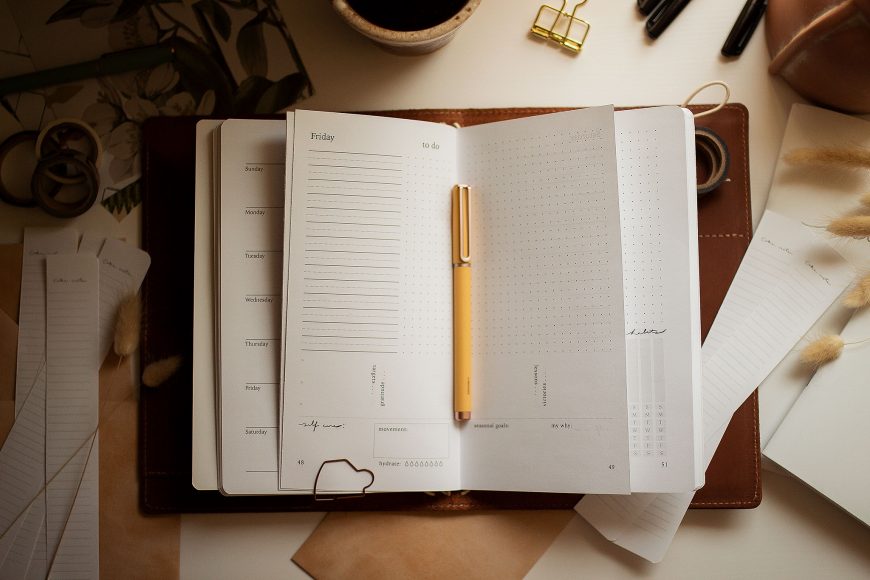
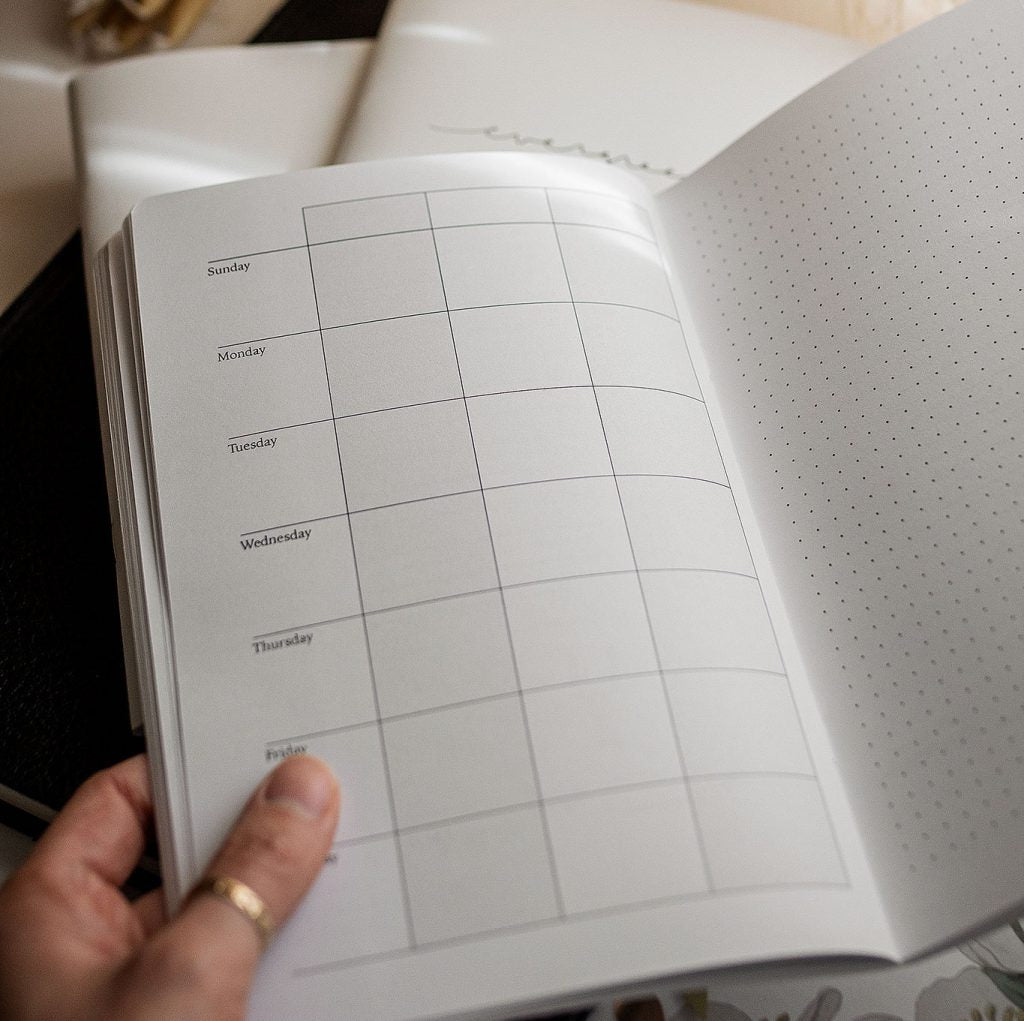
Begin by folding or tearing the perforated edges of each day page of your current week. This creates the dutch door effect in the layout, and will allow you to see your week’s agenda and your day spread at the same time. {pro-tip: folded/torn pages can be used for lists, scratch notes, given to kids for notes or paper chains, and easily recycled when no longer needed}

On the first page of your week (we call this the “week spread”) write the month and dates on the vertical week agenda space in the leftmost column. Then in that same column, write down any appointments and deadlines you have for the week. We recommend that all time-sensitive data is marked in that leftmost column so that it will remain visible throughout the week.

Fill in the three columns to the right of the vertical calendar. These categories are customizable to your lifestyle, but here are some schemes you can try:

  • Home | Business | Meals (for the working gal who also has to #feedthelittlepeople)
  • To Do | Lessons | Activities (for the homeschool mama always on the go)
  • Morning | Afternoon | Evening (for the lady who likes to map her day in time blocks)
  • Homework | Work | Friends (for the college chic doing #allthethings)
  • Job | Side Hustle #1 | Side Hustle #2 (we see you, dreamer girl)

Just as the Annual gives you a map of your year, the week spread gives you a map of your week, and serves as a great reference as you go to plan each day. Have a business task that needs to fall on a specific day? You now have a place to anchor that. Have a set day you do errands, or perhaps a theme for every day of the week? You now have a framework ready to fill in!

The blank bullet space to the right of the calendar and column page can be used to braindump to-do lists, write out meals for the week, sketch something lovely, or write something that will inspire you throughout the week. Make it serve you how you like! If nothing readily comes to mind, leave it blank! This is your planner, and white space is good for the brain.

At the end of your week (the rightmost section of your Saturday day spread), you will find a habit tracker. Above that, you’ll also see a column of blank bullet space. Use the blank bullet space for something you want to see all week. Our favorite uses:

  • Listing 1-3 target goals for the week
  • Keeping a to-do list for the random things that pop up through the week
  • Writing a running list of people to get back to

Planning each day can happen the night before or in the morning—or at lunch, you know, when life happens. But we will tell you this: if you consistently make space at the same time every day to sink into deep work mode {80-90% singular focus} while using your planner to reverse engineer your goals, you can make some serious progress on intentional living in a remarkably short amount of time (for more about our approach to goal planning, read our ROOTED goal series).

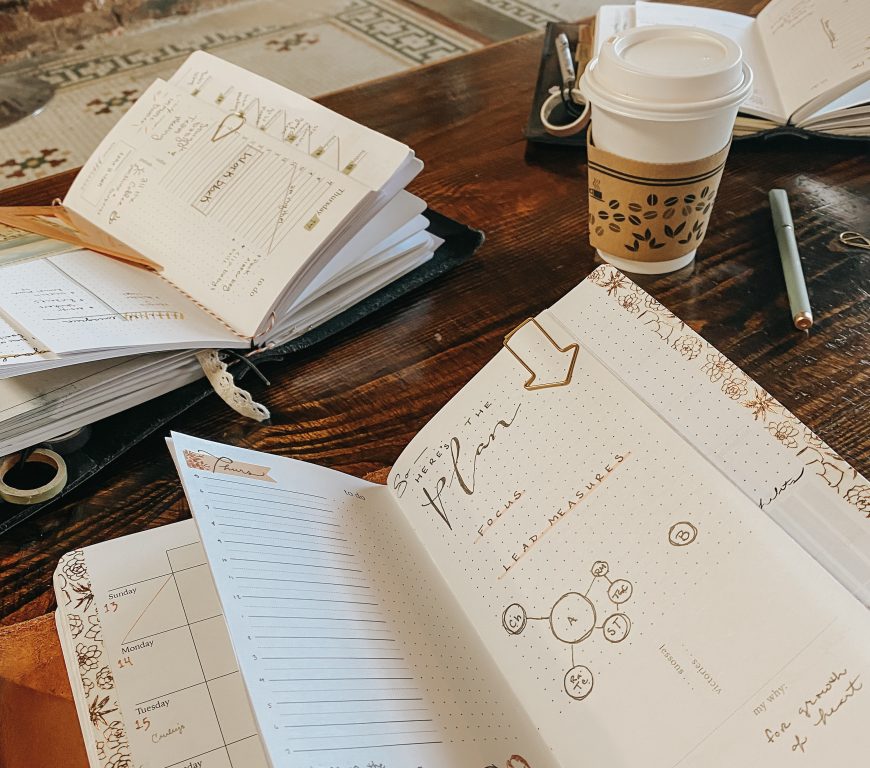
Use the targets section to write out your top 3-5 goals for that day. This can be as simple as “fold laundry” or as weighty as a major business goal. This section should replace the traditional to-do list in your mind. Research has proven that conventional to-do lists overwhelm rather than help get you focused on what matters most. But distilling your top targets down to just 1-3 goals, you’re forced to ask the question: “what will really move the needle forward on what matters most today?”

Use the lined section under the day header to time-block, writing the hours along the left side {pro-tip: start your day when you want & end it when you want, whether that’s tracking all the hours you’re awake, or just your working hours}.

Referencing your vertical week agenda (that you can see thanks to those torn/folded perforated dutch doors), write out any appointments you have that day. Then, chart out when you’ll be doing each of your top targets. Mark out your daily rhythm as well: meals, nap time, commutes, work hours, etc.

Use the bullet space under the “to do” header to write out specific tasks you plan to tackle during the day {pro-tip: write your to-do list items next to the appropriate time-blocks}.

Taking time to reflect upon and write down the day’s lessons, victories & gratitude are proven methods of increasing personal growth and productivity. Writing down your seasonal goals, and your motivational “why” behind each one, is scientifically proven to help you become more likely to achieve those goals! (Our micro-journaling prompts are a streamlined version of the reflection habits that world class leaders attribute as foundational to their success!) However, if you’re feeling the least bit overwhelmed, know that these sections can be customized to whatever matters most to you in this season. We even know mamas who use the “lessons” portion to track their kiddos’ schoolwork!

The blank bullet space on each day is completely customizable. It’s there for you any time you need a place to write something down throughout your day. Take notes, make lists, take up long-form journaling, sketch things (practical or artistic), brain-dump, mind-map, or design your own Pinterest-inspired layouts. Whether you use it to the max, or whether it’s often blank, it’s always there to help you organize your thoughts.

__________________________________________________

The Evergreen Planner system is comprised of three unique pieces: the Coverthe Annual and the Monthly. Here at Evergreen we believe in self-compassionate planning and want to inspire women to craft a lifestyle that both fuels their dreams and serves their daily rhythms. Learn more about our system here!

July 28, 2021

Getting Started with the Evergreen Planner: The Cover and The Annual

If you’ve spent anytime following us on Instagram or here on the blog, you know we spent YEARS hustling and dreaming about the day this planner system would get into YOUR hands. We get so excited with each new purchase, because we know the power of this planner system to help you craft an intentional lifestyle, day in and day out.

The Evergreen Planner doesn’t just track everything you have to get done each day (though it does do a marvelous job of that). The Evergreen Planner was engineered as a daily companion that gets you focused to take action on those vital heart goals that keep throbbing at your core. And behind this gorgeous product is a movement of women who believe that goals like that are worth crafting a lifestyle to support.

But learning to plan is not just about having the right planning tools; a big part of being able to craft an intentional lifestyle is being able to make those tools work for you. This is what our new blog series is going to be all about.

This series will give you everything you need to set up this planner in a way that completely fits you—your lifestyle, your goals, your priorities. If you’ve purchased our system, you will have received a lot of this info over email. But the uses of this planner are truly endless. We are regularly discovering new ways we use it in our own lives, so even if you’ve seen this info, keep reading! You never know what new tricks you might pick up.

If you’re brand new to our way of planning, remember that like any new system you implement, it may take some time to break in. Don’t sweat if it seems to take a little while to find your rhythm. We’re all about self-compassionate planning around here. Make adjustments and keep tweaking what you’re doing – because at the end of the day, that’s all that matters: you having a planner that works for your goals and dreams.

Setting up your new planner: The Cover

This traveler’s journal is as useful as it is beautiful! It was designed to protect and bind your system into one cohesive unit, all while maintaining a timeless look that works for any style.

  • Slip your Annual in the first elastic, and your Monthly in the next {pro-tip: if your booklets feel loose, undo the knot of your spine elastic, tighten, and re-tie}.
  • Loop pen clips through one circle elastic on the right side {McCauley holds 3-4 pens on hers!}, and loop your favorite washi tape in the other.
  • Fill those pockets with receipts, planning accessories, sticky pads, a ruler or polaroids… you know, #allthethings {Shelby has legit replaced her wallet with her Cover!}

Setting up your new planner: The Annual

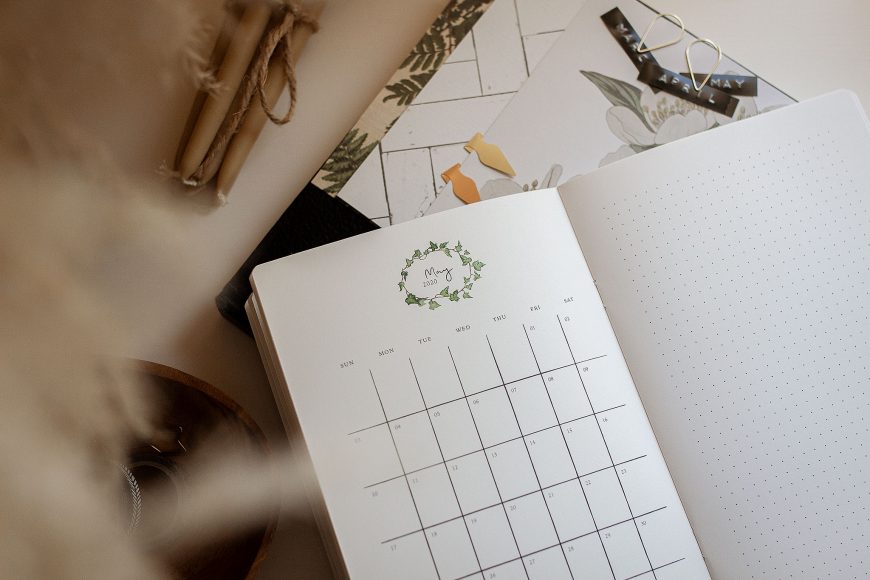
This is the bird’s eye-view of your year. Mark important dates you don’t want to forget {pro-tip: don’t mark every date you can think of – mark only the ones you will need to show up for, which will require planning or space to celebrate}

Use the three pages between each month in a way that suits your lifestyle. Check out our Pinterest board for spread inspiration!

We’ve left this space for you to:

The Annual is an extremely versatile piece. It can be as beautiful or as simple as you need it to be!

__________________________________________________

The Evergreen Planner system is comprised of three unique pieces: the Cover, the Annual and the Monthly. Here at Evergreen we believe in self-compassionate planning and want to inspire women to craft a lifestyle that both fuels their dreams and serves their daily rhythms. Learn more about our system here!

July 21, 2021

3 Tips for When Your Day Went Differently Than You Planned

You had great plans and then… whelp, you don’t know exactly what happened, but none of your targets for the day were accomplished. Your planner looks like a snapshot of someone else’s ideas because it definitely wasn’t the day you just lived.

You had great plans to make plans, but the baby was up all night so you missed your alarm. You threw a brief glance at your planner before you headed out the door, and now you’re home again staring at a blank spread and wondering why you even tried to start using a day planner to begin with.

We’ve been there.

Really.

Just because we started a planner business doesn’t mean we’re immune to the chaos of life, or that we always have days that perfectly match what we planned. In fact, there are days that the planner (you know, the one we spent years developing) is still completely blank as the day comes to an end.

We can’t make all our plans happen, but we have learned a few tricks about reflecting on chaotic days (or seasons) and pivoting to help our planned goals meet our lived reality.

By the time we’re sliding into bed at night with a brain full of noise, we need some perspective. Thankfully, our blank planner is still sitting there, beckoning us to get our thoughts organized once more.

These 3 exercises have helped us turn our brains from overwhelming noise to purposeful reflection:

1. Write out in your planner all the things you did get done that day.

They’re likely not big milestones: you may write in “held teething baby all morning” or “purchased groceries.” Or maybe you did get a lot done because you were hit with inspiration, and you brainstormed and then sketched out your entire business marketing plan for the next three months(!!)… but it just wasn’t the thing you had planned. Whatever you did, write it in. It may not feel like an accomplishment, but seeing on paper how your day played out (even retroactively) will give you perspective.

2. Evaluate how you spent your time.

Did you binge-watch the latest Netflix show? Maybe this means your brain is craving rest and you need to make space for things that will truly revive you. Or, it may mean it’s time to get serious about the time that’s getting frittered away and take your accountability mechanisms to the next level by hiring a coach or getting into a mastermind group. Did life throw you a curve ball and you had to pivot to meet immediate needs? Celebrate that and adjust the next few days to fit in those critical to-do items, dropping the ones you had planned that aren’t essential, and rescheduling the ones you had planned that are. Make notes on what your reflection time reveals. This will enable you to plan more effectively in the future. With your planner in hand, you can even begin, right away, to apply some of the things you learned from troubleshooting your schedule.

3. Learn and plan for the future.

The more you do this, the more patterns will appear. Maybe you gravitate towards errands on a certain day, or find there’s one morning a week you always miss your alarm (thanks to that weekly late night at church). You can change your plans to reflect those patterns. Plan that persistent errand-day for running errands! Give yourself that morning to sleep in (you probably need it)! Get real about how much time you have, and how much time tasks really take. Add at least 15 minutes of margin to pad significant transitions in your day (commutes, nap times, meetings, meals), and make sure you’re scheduling in enough downtime (and actual SLEEP time!)

Your rhythms must inform your plans as much as your plans must dictate your rhythms.

Reflecting on days that don’t go as planned is extremely helpful as you continue to hone a lifestyle that is truly life-giving.

_______________________________________________________________

Are you ready to launch into an entirely new way of planning? We created the Evergreen Planner System because we needed a place to both make plans and evaluate the days when things were off. The Getting Started Kit is the perfect way to try two of our core products – the Annual and the Monthly. Don’t wait until we launch our next subscription box – get the tools you need for intentional living today!

July 14, 2021

Why Make Plans When You Know Plans Change?

Have you ever had this experience? You dive deep into goal setting, chart out a strong schedule, and then start to work the plan. 

But then, dun, dun, dunnn

Life happens. 

And after several weeks, you start to realize a lot has changed since you laid your plans, and you’re really making only like 20% of the changes you’d planned to make!

This phenomenon is especially true for goal-oriented mamas. We might be as determined and diligent as the sky is blue, but our kids are always rolling into new phases of need, surprising us with the twists and turns of their own growth journeys, and presenting regular challenges to the best laid plans. 

So what’s the point of reverse-engineering goals and setting intentions? Why bother to sketch out your ideal day in a time-blocking planner if you know things will change?

Because even if things change, making a plan is still the bridge between the life you’re living now and the life you want.

Here’s how it works.

Your planner shows you what’s realistic

How many times have you sat down to write a todo list for the day that was—let’s be honest—a total pipe dream? Been there, done that

Our timeblocked planner equips you with a canvas that guides you to paint a realistic picture with your time. 

You write down when you’ll wake up, when you’ll be going to bed. Then you block in things like meal times, kids’ naptimes, homeschooling blocks, quiet time, and time with honey. 

Then you can see the ideal pockets of time for shallow administrative work like cleaning the house, making appointments, or answering DMs. But most importantly, you can spot the best times to carve out deep work blocks where you can give 90% or more of your focus to your most important projects.

Then you pad all of this with ample margin. (Think of margin like the lubricant for your schedule. It allows you to breathe and be able to shift things around when needed without stripping any gears.)

When you have a realistic plan that actually can fit in the containers of time that you have available, if something changes, you can just take a minute to rearrange the blocks and pivot with intention, knowing that your bases are covered.

Your planner gives you a platform for seeing how your aspirations might play out in real-time, making your intuition smarter with data. 

This is especially important for making progress on huge goals.

You’ve got to be able to imagine how your intentions can play out in the landscape of your lived reality.

Have you ever heard of productivity expert Cal Newport? The man is a raving genius. He teaches all about the vital importance of carving out time for deep work if you want to move the needle forward on the things that matter most. But his advice is tailored to a demographic with dedicated work hours in an office. 

When you’re a work from home mama—especially if the kids are home for school—you should still be scheduling in solid deep work blocks. 

But let’s face it. You’re gonna need a Plan B in your arsenal for when the 9yo has a nosebleed all over his remote schooling laptop right smack in the middle of your recording session, or for when the kids wake you up three times and the 5am hustle just doesn’t happen. 

This is part of why starting out with a realistic plan (with lots of margin) is vital. As work from home mamas, we need a realistic plan, a working memory for what needs to happen next in our goals, and an informed intuition to guide us when we pivot our projects around the adventure that is motherhood. 

Our planner gives us a visual guide to all the data we need to become experts on our own priorities.

Your planner cultivates a working memory. 

You may expect your brain to just automatically click into gear every time you wake up to greet the day, or sit down at your desk to knock out important projects. 

But what happens naturally is that you end up neglecting the 20% of what you could be doing to really move the needle forward on your goals because you somehow defaulted to buzzing around in the 80% of non-essential activity. 

This is because, most of the time, the work you need to do to make serious progress is hard work. It’s mentally taxing, and probably pretty overwhelming.

Your brain looks at it and balks, searching wildly for any out. I’d hoped to make progress on my book, but… look, my inbox needs organizing. Don’t mind if I do! Oh, I should post something on instagram stories since my laptop and coffee cup look so cute on my desk. Heyyyy… she’s live right now… I’ve been wanting to catch one of her lives… And boom! Before we know it, naptime is over, and we’re wondering where the time went. 

As difficult as it may seem to fight distractions in this modern digital age, it’s actually very simple to overcome the constant temptation toward low-quality activity. 

In addition to having strong attention protection habits (such as turning most of the notifications off on your phone), you must cultivate a strong working memory so that every time you arrive at an opportunity to make progress, you can immediately seize that opportunity by prioritizing the next best thing with expert precision. 

Cultivating a strong working memory is as simple as using your planner on a daily basis. It takes a little bit of time to get into the swing of it, but once you’ve gotten real about how much time you have and the responsibilities on your plate, and you’ve developed goals that deeply compel you forward, then you can begin to use your planner to break down those responsibilities and goals into milestones. 

Once you have the big picture sectioned out into milestones, you can take those first essential progress milestone you identified, and you can break them down even further into bite-sized action steps that you can now schedule into your upcoming week. As you work with these bite-sized action steps, fleshing their details out at a granular level, and bringing them into the flow of your real context, taking action on these things begins to form the structure of your working memory for that larger goal or responsibility.

Using your planner daily (especially if you get really still, really real, and really laser-focused on what’s important next) reinforces these intentions, and helps you to feel like an expert on your own priorities. That expertise coupled with strong attention protection habits (and mobilized by diligent action) will automatically launch you onto a whole new level of productivity that you didn’t even know was possible. 

Your planner remains ever available for micro-optimization. 

Just because, as goal-oriented mamas, we have to be a lot more flexible with our schedule than many other workers, it doesn’t mean we have to throw our hands up and surrender to the chaos.

No. We’re called to be agents of stability and leaders in progress.

Even if having kids, a husband, a church family—and many Providential interruptions for hospitality and ministry—means that we can’t optimize our lives like bachelor Tim Ferris (and I mean, he’s not even living the “Tim Ferris lifestyle” anymore), that doesn’t mean that we can’t leverage the skill of optimization in order to increase our productivity in very specific ways.

Your planner is the perfect tool for spotting opportunities for micro-optimization, and getting really creative about how to organize your resources for better results. 

  • You could optimize your morning routine in order to reduce friction and potential distractions, allowing you up to three hours for deep work before you launch into mom duty. 
  • You could optimize your sleeping schedules and daily rhythms so that everyone’s focused energy peaks at around the same time and the environment is prepared for tranquility, creating the perfect pocket in your day for homeschooling.
  • You could optimize your use of screen time with kids so that their first inclination is to play outside or help with chores, and then when you really need them to sit still and relax, you know the infrequency of the experience will empower the show to keep their attention (without zombifying their little brains!)
  • You could optimize your planning sessions so that you can stop wasting time looking for sticky-notes, wading through outdated todo lists for that one detail you can’t lose track of, or getting distracted by notification when you’re trying to use your Google calendar. You can do this by having a single hub for your brain, in a powerful analog format, already optimized to guide your brain quickly into a productive and organized mindset. 
  • You could sit down at the coffee shop with that unexpected free hour and use your planner to micro-optimize your rare alone time for progress on work or for deeply nourishing self-care. 
  • You can micro-optimize anything. And as long as the goal is to support your progress (rather than to put a straight-jacket on your time), micro-optimization is a small investment of upfront organization that pays incredible dividends.

Your planner equips you to see what’s working and what needs to change. 

Look at the 20% of your plan that you did implement. It might be the 20% that matters most! There’s nothing wrong with reworking your plan once you realize you over-planned before. 

Usually, 20% of everything we could do will get 80% of the results we want. So if you set ten goals, but the only two goals you ended up accomplishing were, for example, (1) getting more sleep, and (2) buying different homeschool curriculum, then it may be that those were the two most important things that needed to change. 

You might then be better able to tackle the other eight goals, or you might realize that some of them become irrelevant once you’ve taken care of the other more fundamental issues.

Alternatively, if you went off plan altogether, it might be that using your planner cleared the clutter of your head and let what really was important rise to the surface through your choices. There have been times when I’ve set my quarterly goals, felt very pumped about them, only to see that fresh influx of can-do creativity organically go to accomplish the other, more important issues I finally had the mental bandwidth to deal with. 

And, of course, it might be that you simply didn’t follow through with the changes you know you need to make. If you use your planner to keep track of what does happen, you’ll be able to go back and troubleshoot the dynamics of how your goals interact with the realities of your daily life. 

Your planner leads you through focus-centering prompts and mindset-adjusting reflection habits, giving you daily opportunities to improve your thought-life. 

One of the biggest challenges of living in a first-world country in the 21st century is having space to collect your thoughts and set your intentions. Focus has to be curated in order to be harnessed. 

The Evergreen Planner has built-in productivity prompts that, if used habitually, work to trigger your mind into a focused state. This state becomes a platform for micro-optimization of your available time resources.

And second only to low-quality distractions, the biggest threat to your productivity is a lack of motivation. Motivation is fueled by hope, and hope is either nurtured or diminished in our thought-lives. 

Every day page of the Evergreen Planner includes micro-journaling prompts that lead you to reflect with gratitude, consider personal growth lessons, mentally celebrate your victories, and remember your “why” for your quarterly goals.

The space for filling out each one of these prompts is small—compelling you to take just a moment to respond to each one. But though they be small, these micro-journaling prompts are fiercely effective, allowing you to shift into a growth-mindset in just under five minutes. 

After a while, your brain begins to associate your planner with hope, progress, and tremendous motivation. You then have a tool in your aresnal that you can open at any time to trigger your brain to shift immediately into a healthy, passionate, diligent state of mind. 

Your planner gives you a solid platform for pivoting with intention. 

Take a second to imagine how it feels to have your best-laid plans changed in an instant due to an unexpected turn of events (#momlife). 

Now imagine facing that same disruptive experience with all of this under your belt:

  • A plan that was so realistic and padded with margin that you can simply rearrange it like lego-blocks. 
  • A mental map of what’s happening in your day and your week so that you can make decisions on the fly, leveraging your deeply informed gifts of intuition. 
  • A strong working memory that can immediately bring forth the details of your next right steps so that you can maximize opportunities for administrative or deep work tasks at the best possible times, and then fully relax when you’re focused exclusively on nurturing relationships.
  • All the data you need to take stock of your upcoming timeblocks and responsibilities so that you can increase your productive output and decrease wasted resources through micro-optimization.
  • A hub that allows you to see what’s working in your life (and troubleshoot what’s not) while helping you keep what matters most to you top of mind.
  • A planner that immediately centers your focus and triggers your brain to shift into a growth-mindset.

With that in your toolkit, imagine how you can face Providential interruptions. 

With strong mindset habits and a little mental organization, you can keep your heart open to God’s redirections even as you keep making progress on the long-term work He’s called you to do. 

And, let’s be honest. The Providential pivot is where the best stuff happens, isn’t it? 

__________________________________________

Are you ready to launch into an entirely new way of planning? We created the Evergreen Planner System because we needed a flexible tool that would enable us to both make plans, and pivot when those plans change. The Getting Started Kit is the perfect way to try two of our core products – the Annual and the Monthly. Don’t wait until we launch our next subscription box – get the tools you need today!