Tag

planner

July 28, 2021

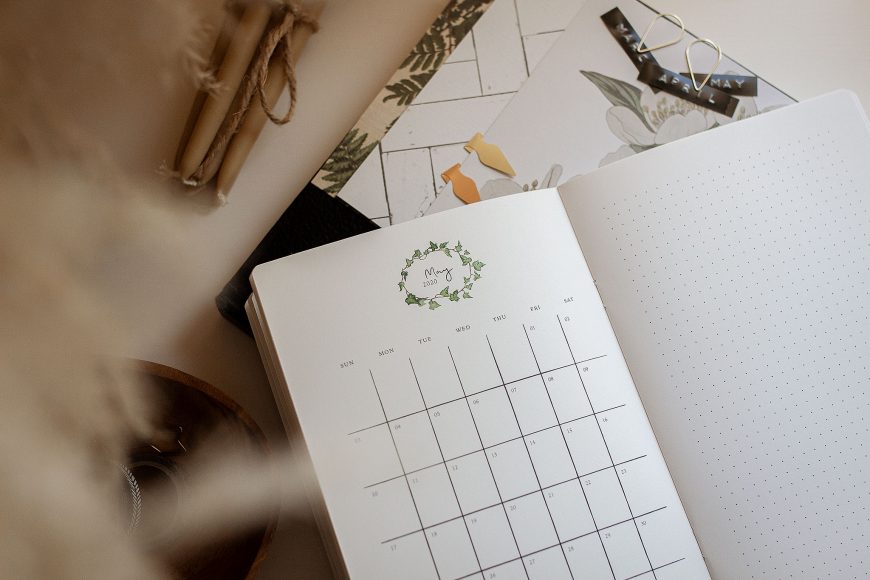
Getting Started with the Evergreen Planner: The Cover and The Annual

If you’ve spent anytime following us on Instagram or here on the blog, you know we spent YEARS hustling and dreaming about the day this planner system would get into YOUR hands. We get so excited with each new purchase, because we know the power of this planner system to help you craft an intentional lifestyle, day in and day out.

The Evergreen Planner doesn’t just track everything you have to get done each day (though it does do a marvelous job of that). The Evergreen Planner was engineered as a daily companion that gets you focused to take action on those vital heart goals that keep throbbing at your core. And behind this gorgeous product is a movement of women who believe that goals like that are worth crafting a lifestyle to support.

But learning to plan is not just about having the right planning tools; a big part of being able to craft an intentional lifestyle is being able to make those tools work for you. This is what our new blog series is going to be all about.

This series will give you everything you need to set up this planner in a way that completely fits you—your lifestyle, your goals, your priorities. If you’ve purchased our system, you will have received a lot of this info over email. But the uses of this planner are truly endless. We are regularly discovering new ways we use it in our own lives, so even if you’ve seen this info, keep reading! You never know what new tricks you might pick up.

If you’re brand new to our way of planning, remember that like any new system you implement, it may take some time to break in. Don’t sweat if it seems to take a little while to find your rhythm. We’re all about self-compassionate planning around here. Make adjustments and keep tweaking what you’re doing – because at the end of the day, that’s all that matters: you having a planner that works for your goals and dreams.

Setting up your new planner: The Cover

This traveler’s journal is as useful as it is beautiful! It was designed to protect and bind your system into one cohesive unit, all while maintaining a timeless look that works for any style.

  • Slip your Annual in the first elastic, and your Monthly in the next {pro-tip: if your booklets feel loose, undo the knot of your spine elastic, tighten, and re-tie}.
  • Loop pen clips through one circle elastic on the right side {McCauley holds 3-4 pens on hers!}, and loop your favorite washi tape in the other.
  • Fill those pockets with receipts, planning accessories, sticky pads, a ruler or polaroids… you know, #allthethings {Shelby has legit replaced her wallet with her Cover!}

Setting up your new planner: The Annual

This is the bird’s eye-view of your year. Mark important dates you don’t want to forget {pro-tip: don’t mark every date you can think of – mark only the ones you will need to show up for, which will require planning or space to celebrate}

Use the three pages between each month in a way that suits your lifestyle. Check out our Pinterest board for spread inspiration!

We’ve left this space for you to:

The Annual is an extremely versatile piece. It can be as beautiful or as simple as you need it to be!

__________________________________________________

The Evergreen Planner system is comprised of three unique pieces: the Cover, the Annual and the Monthly. Here at Evergreen we believe in self-compassionate planning and want to inspire women to craft a lifestyle that both fuels their dreams and serves their daily rhythms. Learn more about our system here!

July 21, 2021

3 Tips for When Your Day Went Differently Than You Planned

You had great plans and then… whelp, you don’t know exactly what happened, but none of your targets for the day were accomplished. Your planner looks like a snapshot of someone else’s ideas because it definitely wasn’t the day you just lived.

You had great plans to make plans, but the baby was up all night so you missed your alarm. You threw a brief glance at your planner before you headed out the door, and now you’re home again staring at a blank spread and wondering why you even tried to start using a day planner to begin with.

We’ve been there.

Really.

Just because we started a planner business doesn’t mean we’re immune to the chaos of life, or that we always have days that perfectly match what we planned. In fact, there are days that the planner (you know, the one we spent years developing) is still completely blank as the day comes to an end.

We can’t make all our plans happen, but we have learned a few tricks about reflecting on chaotic days (or seasons) and pivoting to help our planned goals meet our lived reality.

By the time we’re sliding into bed at night with a brain full of noise, we need some perspective. Thankfully, our blank planner is still sitting there, beckoning us to get our thoughts organized once more.

These 3 exercises have helped us turn our brains from overwhelming noise to purposeful reflection:

1. Write out in your planner all the things you did get done that day.

They’re likely not big milestones: you may write in “held teething baby all morning” or “purchased groceries.” Or maybe you did get a lot done because you were hit with inspiration, and you brainstormed and then sketched out your entire business marketing plan for the next three months(!!)… but it just wasn’t the thing you had planned. Whatever you did, write it in. It may not feel like an accomplishment, but seeing on paper how your day played out (even retroactively) will give you perspective.

2. Evaluate how you spent your time.

Did you binge-watch the latest Netflix show? Maybe this means your brain is craving rest and you need to make space for things that will truly revive you. Or, it may mean it’s time to get serious about the time that’s getting frittered away and take your accountability mechanisms to the next level by hiring a coach or getting into a mastermind group. Did life throw you a curve ball and you had to pivot to meet immediate needs? Celebrate that and adjust the next few days to fit in those critical to-do items, dropping the ones you had planned that aren’t essential, and rescheduling the ones you had planned that are. Make notes on what your reflection time reveals. This will enable you to plan more effectively in the future. With your planner in hand, you can even begin, right away, to apply some of the things you learned from troubleshooting your schedule.

3. Learn and plan for the future.

The more you do this, the more patterns will appear. Maybe you gravitate towards errands on a certain day, or find there’s one morning a week you always miss your alarm (thanks to that weekly late night at church). You can change your plans to reflect those patterns. Plan that persistent errand-day for running errands! Give yourself that morning to sleep in (you probably need it)! Get real about how much time you have, and how much time tasks really take. Add at least 15 minutes of margin to pad significant transitions in your day (commutes, nap times, meetings, meals), and make sure you’re scheduling in enough downtime (and actual SLEEP time!)

Your rhythms must inform your plans as much as your plans must dictate your rhythms.

Reflecting on days that don’t go as planned is extremely helpful as you continue to hone a lifestyle that is truly life-giving.

_______________________________________________________________

Are you ready to launch into an entirely new way of planning? We created the Evergreen Planner System because we needed a place to both make plans and evaluate the days when things were off. The Getting Started Kit is the perfect way to try two of our core products – the Annual and the Monthly. Don’t wait until we launch our next subscription box – get the tools you need for intentional living today!

July 14, 2021

Why Make Plans When You Know Plans Change?

Have you ever had this experience? You dive deep into goal setting, chart out a strong schedule, and then start to work the plan. 

But then, dun, dun, dunnn

Life happens. 

And after several weeks, you start to realize a lot has changed since you laid your plans, and you’re really making only like 20% of the changes you’d planned to make!

This phenomenon is especially true for goal-oriented mamas. We might be as determined and diligent as the sky is blue, but our kids are always rolling into new phases of need, surprising us with the twists and turns of their own growth journeys, and presenting regular challenges to the best laid plans. 

So what’s the point of reverse-engineering goals and setting intentions? Why bother to sketch out your ideal day in a time-blocking planner if you know things will change?

Because even if things change, making a plan is still the bridge between the life you’re living now and the life you want.

Here’s how it works.

Your planner shows you what’s realistic

How many times have you sat down to write a todo list for the day that was—let’s be honest—a total pipe dream? Been there, done that

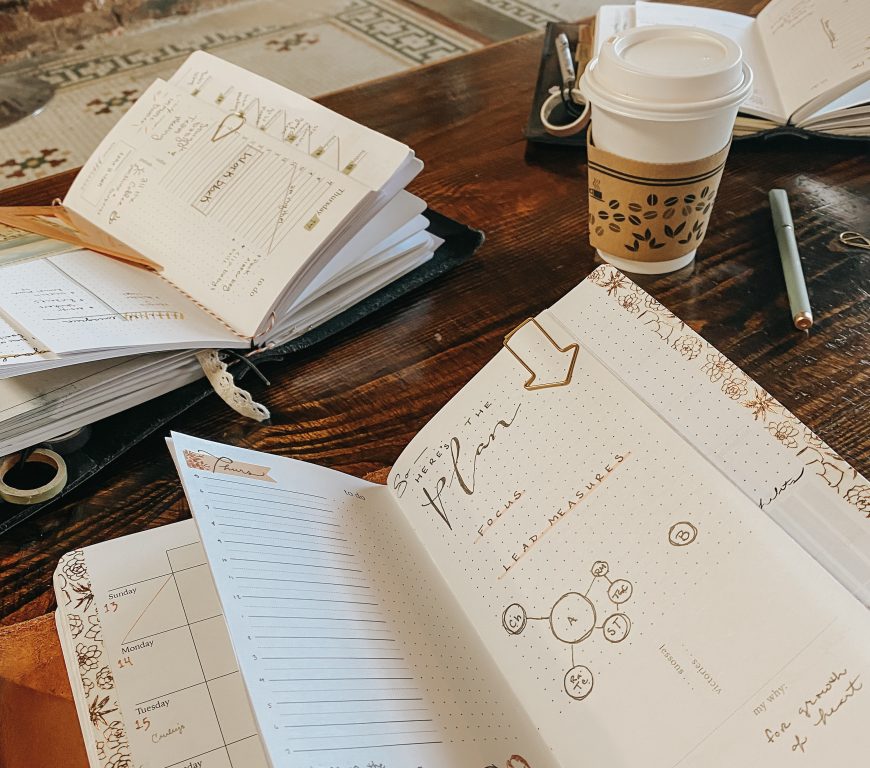
Our timeblocked planner equips you with a canvas that guides you to paint a realistic picture with your time. 

You write down when you’ll wake up, when you’ll be going to bed. Then you block in things like meal times, kids’ naptimes, homeschooling blocks, quiet time, and time with honey. 

Then you can see the ideal pockets of time for shallow administrative work like cleaning the house, making appointments, or answering DMs. But most importantly, you can spot the best times to carve out deep work blocks where you can give 90% or more of your focus to your most important projects.

Then you pad all of this with ample margin. (Think of margin like the lubricant for your schedule. It allows you to breathe and be able to shift things around when needed without stripping any gears.)

When you have a realistic plan that actually can fit in the containers of time that you have available, if something changes, you can just take a minute to rearrange the blocks and pivot with intention, knowing that your bases are covered.

Your planner gives you a platform for seeing how your aspirations might play out in real-time, making your intuition smarter with data. 

This is especially important for making progress on huge goals.

You’ve got to be able to imagine how your intentions can play out in the landscape of your lived reality.

Have you ever heard of productivity expert Cal Newport? The man is a raving genius. He teaches all about the vital importance of carving out time for deep work if you want to move the needle forward on the things that matter most. But his advice is tailored to a demographic with dedicated work hours in an office. 

When you’re a work from home mama—especially if the kids are home for school—you should still be scheduling in solid deep work blocks. 

But let’s face it. You’re gonna need a Plan B in your arsenal for when the 9yo has a nosebleed all over his remote schooling laptop right smack in the middle of your recording session, or for when the kids wake you up three times and the 5am hustle just doesn’t happen. 

This is part of why starting out with a realistic plan (with lots of margin) is vital. As work from home mamas, we need a realistic plan, a working memory for what needs to happen next in our goals, and an informed intuition to guide us when we pivot our projects around the adventure that is motherhood. 

Our planner gives us a visual guide to all the data we need to become experts on our own priorities.

Your planner cultivates a working memory. 

You may expect your brain to just automatically click into gear every time you wake up to greet the day, or sit down at your desk to knock out important projects. 

But what happens naturally is that you end up neglecting the 20% of what you could be doing to really move the needle forward on your goals because you somehow defaulted to buzzing around in the 80% of non-essential activity. 

This is because, most of the time, the work you need to do to make serious progress is hard work. It’s mentally taxing, and probably pretty overwhelming.

Your brain looks at it and balks, searching wildly for any out. I’d hoped to make progress on my book, but… look, my inbox needs organizing. Don’t mind if I do! Oh, I should post something on instagram stories since my laptop and coffee cup look so cute on my desk. Heyyyy… she’s live right now… I’ve been wanting to catch one of her lives… And boom! Before we know it, naptime is over, and we’re wondering where the time went. 

As difficult as it may seem to fight distractions in this modern digital age, it’s actually very simple to overcome the constant temptation toward low-quality activity. 

In addition to having strong attention protection habits (such as turning most of the notifications off on your phone), you must cultivate a strong working memory so that every time you arrive at an opportunity to make progress, you can immediately seize that opportunity by prioritizing the next best thing with expert precision. 

Cultivating a strong working memory is as simple as using your planner on a daily basis. It takes a little bit of time to get into the swing of it, but once you’ve gotten real about how much time you have and the responsibilities on your plate, and you’ve developed goals that deeply compel you forward, then you can begin to use your planner to break down those responsibilities and goals into milestones. 

Once you have the big picture sectioned out into milestones, you can take those first essential progress milestone you identified, and you can break them down even further into bite-sized action steps that you can now schedule into your upcoming week. As you work with these bite-sized action steps, fleshing their details out at a granular level, and bringing them into the flow of your real context, taking action on these things begins to form the structure of your working memory for that larger goal or responsibility.

Using your planner daily (especially if you get really still, really real, and really laser-focused on what’s important next) reinforces these intentions, and helps you to feel like an expert on your own priorities. That expertise coupled with strong attention protection habits (and mobilized by diligent action) will automatically launch you onto a whole new level of productivity that you didn’t even know was possible. 

Your planner remains ever available for micro-optimization. 

Just because, as goal-oriented mamas, we have to be a lot more flexible with our schedule than many other workers, it doesn’t mean we have to throw our hands up and surrender to the chaos.

No. We’re called to be agents of stability and leaders in progress.

Even if having kids, a husband, a church family—and many Providential interruptions for hospitality and ministry—means that we can’t optimize our lives like bachelor Tim Ferris (and I mean, he’s not even living the “Tim Ferris lifestyle” anymore), that doesn’t mean that we can’t leverage the skill of optimization in order to increase our productivity in very specific ways.

Your planner is the perfect tool for spotting opportunities for micro-optimization, and getting really creative about how to organize your resources for better results. 

  • You could optimize your morning routine in order to reduce friction and potential distractions, allowing you up to three hours for deep work before you launch into mom duty. 
  • You could optimize your sleeping schedules and daily rhythms so that everyone’s focused energy peaks at around the same time and the environment is prepared for tranquility, creating the perfect pocket in your day for homeschooling.
  • You could optimize your use of screen time with kids so that their first inclination is to play outside or help with chores, and then when you really need them to sit still and relax, you know the infrequency of the experience will empower the show to keep their attention (without zombifying their little brains!)
  • You could optimize your planning sessions so that you can stop wasting time looking for sticky-notes, wading through outdated todo lists for that one detail you can’t lose track of, or getting distracted by notification when you’re trying to use your Google calendar. You can do this by having a single hub for your brain, in a powerful analog format, already optimized to guide your brain quickly into a productive and organized mindset. 
  • You could sit down at the coffee shop with that unexpected free hour and use your planner to micro-optimize your rare alone time for progress on work or for deeply nourishing self-care. 
  • You can micro-optimize anything. And as long as the goal is to support your progress (rather than to put a straight-jacket on your time), micro-optimization is a small investment of upfront organization that pays incredible dividends.

Your planner equips you to see what’s working and what needs to change. 

Look at the 20% of your plan that you did implement. It might be the 20% that matters most! There’s nothing wrong with reworking your plan once you realize you over-planned before. 

Usually, 20% of everything we could do will get 80% of the results we want. So if you set ten goals, but the only two goals you ended up accomplishing were, for example, (1) getting more sleep, and (2) buying different homeschool curriculum, then it may be that those were the two most important things that needed to change. 

You might then be better able to tackle the other eight goals, or you might realize that some of them become irrelevant once you’ve taken care of the other more fundamental issues.

Alternatively, if you went off plan altogether, it might be that using your planner cleared the clutter of your head and let what really was important rise to the surface through your choices. There have been times when I’ve set my quarterly goals, felt very pumped about them, only to see that fresh influx of can-do creativity organically go to accomplish the other, more important issues I finally had the mental bandwidth to deal with. 

And, of course, it might be that you simply didn’t follow through with the changes you know you need to make. If you use your planner to keep track of what does happen, you’ll be able to go back and troubleshoot the dynamics of how your goals interact with the realities of your daily life. 

Your planner leads you through focus-centering prompts and mindset-adjusting reflection habits, giving you daily opportunities to improve your thought-life. 

One of the biggest challenges of living in a first-world country in the 21st century is having space to collect your thoughts and set your intentions. Focus has to be curated in order to be harnessed. 

The Evergreen Planner has built-in productivity prompts that, if used habitually, work to trigger your mind into a focused state. This state becomes a platform for micro-optimization of your available time resources.

And second only to low-quality distractions, the biggest threat to your productivity is a lack of motivation. Motivation is fueled by hope, and hope is either nurtured or diminished in our thought-lives. 

Every day page of the Evergreen Planner includes micro-journaling prompts that lead you to reflect with gratitude, consider personal growth lessons, mentally celebrate your victories, and remember your “why” for your quarterly goals.

The space for filling out each one of these prompts is small—compelling you to take just a moment to respond to each one. But though they be small, these micro-journaling prompts are fiercely effective, allowing you to shift into a growth-mindset in just under five minutes. 

After a while, your brain begins to associate your planner with hope, progress, and tremendous motivation. You then have a tool in your aresnal that you can open at any time to trigger your brain to shift immediately into a healthy, passionate, diligent state of mind. 

Your planner gives you a solid platform for pivoting with intention. 

Take a second to imagine how it feels to have your best-laid plans changed in an instant due to an unexpected turn of events (#momlife). 

Now imagine facing that same disruptive experience with all of this under your belt:

  • A plan that was so realistic and padded with margin that you can simply rearrange it like lego-blocks. 
  • A mental map of what’s happening in your day and your week so that you can make decisions on the fly, leveraging your deeply informed gifts of intuition. 
  • A strong working memory that can immediately bring forth the details of your next right steps so that you can maximize opportunities for administrative or deep work tasks at the best possible times, and then fully relax when you’re focused exclusively on nurturing relationships.
  • All the data you need to take stock of your upcoming timeblocks and responsibilities so that you can increase your productive output and decrease wasted resources through micro-optimization.
  • A hub that allows you to see what’s working in your life (and troubleshoot what’s not) while helping you keep what matters most to you top of mind.
  • A planner that immediately centers your focus and triggers your brain to shift into a growth-mindset.

With that in your toolkit, imagine how you can face Providential interruptions. 

With strong mindset habits and a little mental organization, you can keep your heart open to God’s redirections even as you keep making progress on the long-term work He’s called you to do. 

And, let’s be honest. The Providential pivot is where the best stuff happens, isn’t it? 

__________________________________________

Are you ready to launch into an entirely new way of planning? We created the Evergreen Planner System because we needed a flexible tool that would enable us to both make plans, and pivot when those plans change. The Getting Started Kit is the perfect way to try two of our core products – the Annual and the Monthly. Don’t wait until we launch our next subscription box – get the tools you need today!
June 30, 2021

Setting Strong Goals When You Know You’re Not in Control of Tomorrow

The R.O.O.T.E.D. Goal Setting System helps you to identify and reverse-engineer essentialist goals that bridge the gap between the future you want and the life you’re living right now.

Sustainable, Life-Giving Goals Are:

How Can You Set Strong Goals When You Know You’re Not in Control of Tomorrow?

You want to get organized around your goals and chase them with abandon.

But then reality crashes in to your plans, making you question whether goal-setting is all it’s cracked up to be. Perhaps passages like James 4:13-16 or Proverbs 16:9 even thunder into your heart, making you wonder if it’s even Biblically right to invest so much in to goal-setting.

Start digging into productivity and goal-setting literature, throw a stone in any direction, and you’ll hit a quote about how we can (and should) be masters of our own fate and designers of our own destiny. I think this spooks Christians—and for good reason. It spooked me too for a long time.

But there’s a difference between attempting to control tomorrow (spoiler alert: it’ll never happen), and taking personal responsibility for your choices, recognizing that they’ll have a significant impact on the future.

The Bible doesn’t pit God’s sovereignty against man’s responsibility. It’s not an either/or, it’s a both-and.

In fact, in the classic James 4 passage that reminds us to make all of our plans with a “Lord-willing” attitude, verse 17 expounds on James’s purpose for even reminding people that their lives and plans are but a vapor in the bigger picture of God’s eternal purposes and reign over history:

Therefore to him that knoweth to do good, and doeth it not, to him it is sin.

What’s the “therefore” there for? James’s reminder that we’re not in charge of the future is supposed to compel us to have strong priorities.

This entire series on the ROOTED Goal Setting System has been written with this heart:

  • God is in control of our personal histories.
  • He put us in the historical and cultural context that He did for a reason.
  • He made us in His Image for the purpose of stewarding His earth and building Godly communities (starting with our own homes).
  • He’s given us each talents (resources such as time, money, and influence) that we are called to maximize in loving service to Him and others during our lifetimes.
  • God is sovereign, and yet we have freedom of will. The dynamics of this go beyond what we could logically comprehend because we are limited creatures. While He is orchestrating all things together for His glory and the good of His people, we are also fully responsible for the decisions we make and the fruit those decisions bear.

The Scriptures (especially Proverbs) are chock full of practical wisdom about how the sowing and reaping principle plays out quite predictably in the lives of people. And yet forces such as injustice, the brokenness of a fallen world, valid expectations from others, game-changing information (and other disruptions that are allowed by God’s Providence in our personal histories) come in and interplay with that universal sowing and reaping principle in unpredictable ways.

So how do we embrace personal responsibility while still respecting God’s place as, well, God?

The Mindset Shift That Make Sense of Everything

Productivity literature acknowledges the fact that life rarely goes exactly as we imagine it—even if we can invest tons of time, money, and energy into making our plans work out. Books like John C. Maxwell’s Failing Forward lead an entire sub-genre of books helping people cope with the setbacks, the “acts of God” (which we know are actually acts of the intimately involved God), and the personal and societal failures that coalesce to make any significant achievement a serious uphill climb.

So how do you, as a Christian, look at (and even embrace failures and setbacks) in a way that empowers you to keep moving forward on your most important goals?

You need to adopt what’s called a “growth-mindset” that is founded on these two principles:

  1. God gives you the personal responsibility to make plans and choices based on His revealed will (Scripture), the wisdom He’s given you through experience, and the godly desires He’s placed in your heart.
  2. God will develop your goals through the revelation of His Providences, and will give you more light as you walk forward, committing to be faithful even with the little you do know right now.

​You may not know the future, but GOD DOES. He gives you the responsibilities and priorities that He wants to shape your focus. James uses the reality of God’s Providence for tomorrow to urge us to embrace our responsibilities, and do what is right starting today.

When Corrie’s Life Didn’t Go As Planned

Corrie Ten Boom hoped, like many women, to marry and have a family. But when the love of her life buckled under the pressure t0 marry based on status instead of love and commitment, Corrie knew in her heart that she would never marry.

When Corrie’s older sister Betsie became bedridden with illness for a short period of time, a serious vacancy was left in the family business. Corrie rose to the challenge, taking on all of Betsie’s duties at the family watch shop. She found that she loved helping to run the business, and began to develop a system of bookkeeping. This was important because her father was so obsessed with his work as a craftsman that he often forgot to charge his clients! She also loved working with her father at the bench, and in 1922, she became the first woman to be licensed as a watchmaker in The Netherlands.

Corrie also taught Sunday school and Bible classes in the public schools, started a special weekly Bible study for young people with learning difficulties, fostered children, sought out the poorest of the poor, led summer camps, and founded a club for teen girls that would pave the way for a European equivalent to the Girl Scouts. She was known for her powerful executive skills and organization. Even before the refugee camps, Corrie Ten Boom walked in the footsteps of the Proverbs 31 woman, setting strong goals, making profits, and generously sharing her gains with the most vulnerable in her community.

Corrie is an incredible example of taking personal responsibility and maximizing the resources God gives for Kingdom purpose.

But even prudent Corrie couldn’t have imagined what would happen next.

In the early summer of 1940, the Nazis invaded the Netherlands. Soon, Corrie’s beloved home and place of business, de Béjé, would become a hiding place for hunted Jews and one of the organizational outposts for the Dutch resistance. In 1944, Corrie and her entire family were arrested and shipped to concentration camps. Corrie and Betsie were mercifully able to stay together, and began running significant ministry operations within the concentration camp. Corrie watched Betsie die a horrible death, but continued on with the ministry work until God miraculously rescued her from her scheduled execution and delivered Corrie from the concentration camp.

Corrie would go on to bring Betsie’s vision of developing a mercy ministry for ex-Nazis once the war was over, and teaching widely about Christ’s forgiveness. Even as a very elderly woman, Corrie traveled the world as a public speaker, bringing the Gospel of Christ to millions from the stage and through the books she published. She was even granted access to dark, dangerous, and forgotten prison cells, and invited to bring the Gospel to hard-to-reach people behind the Iron Curtain in the USSR, in Red China, and in communist Cuba.

Corrie was an ordinary Christian woman. Raised in a Christian home, slighted by love, enthused by business, motivated in ministry, and a celebrated spiritual and active warrior in the resistance to Nazi genocide. God’s hand in her life led her through profound depths and heights—even pushing her past any reasonable limits of human suffering, yet equipping her with Christ’s strength—and then gave her a massive platform of influence. In reflecting through all of this, Corrie reveals the key to her hopeful, progress-oriented mindset:

“This is what the past is for! Every experience God gives us, every person He puts in our lives is the perfect preparation for the future that only He can see.”
― Corrie Ten Boom, The Hiding Place

This is what it means to make plans and live responsibly in the light of God’s Providence.

When we get laser-focused on the things that matter most to us (as defined by God’s priorities becoming our own, a work that the Spirit does in our hearts we go deeper and deeper with Christ)—and we walk forward in hope, being faithful with little, God will work His will on our lives, bringing us more light, and showing us how to pivot into greater and greater alignment with His goals for us in His Kingdom economy.

We Walk Forward; God Gives Light​

But we can’t get to the future part where we’re learning God’s secret will, until we take those steps of faith and obedience to God’s revealed will in our presentAnd that’s why we make sure our goals are “Rooted in our core calling,” “Organically growing out of our context,” and “Tailored to our lifestyle.” That’s why this goal-setting system is so unlike anything else out there.

The starting point is God’s Providence, but our path forward is lit by what He’s revealed to us today. Who are the people He’s given us to serve, what are the pressures He’s Providentially allowing to capture our attention, and what problems has He given us to solve by leveraging the resources He’s given us?

A goal-setting system like this reminds us that the Kingdom of God does not rise and fall by our efforts—but we do have the responsibility to do our part, exercise our influence, and steward our resources for Christ. This takes a great deal of personal maturity, and getting organized around our goals is an exercise of that same maturity.

So let’s lean into today—into this week—with fresh perspective.​

Living intentionally is all about taking personal responsibility, and setting strong goals for the development of the resources God’s given us. And putting on a mature, Christian growth-mindset means that we’ll be posturing ourselves to embrace all of the ways God develops our goals through the revealing of His will in the days head.

_________________________________________

You need a strong planning habit & the right tools in order to fully dive into the ROOTED Goals goal setting mindset. We created the Evergreen Planner System to support this mindset in a way that is entirely customizable. It can be used in so many ways to support the goals & dreams you are chasing, while also crafting sustainable life rhythms. The Getting Started Kit is the perfect way to try two of our core products – the Annual and the Monthly. Don’t wait until we launch our next subscription box – get the tools you need today!